Validate Your Startup Idea
Most first-time founders skip validation. Learn to test your idea fast, with real people, before you spend months building.
42 lessons33 videos
Sign in to start Module 1: What is Validation?
- 011.1 Setting the Stage for ValidationHsu Ken Ooi, Managing Partner of Iterative, sets the stage for our validation course.
- 021.2 What is Startup Validation?A lot of people talk about validating startup ideas, but what does validation actually mean?
- 031.3 Three Common Validation MistakesHere are 3 common mistakes to watch out for when you begin validating your startup idea.
- 041.4 Why is Validation Important?Too often, good founders work on bad ideas.
- 051.5 What Does Successful Validation Look Like?There is no set rules for validation, but that doesn't mean we should just throw our hands up and not do it.


Module 2: Components and Configurations
- 062.1 Five Essential Validation QuestionsThe question we want to answer is is your startup idea promising?
- 072.2 Five Essential Validation QuestionsTo figure that out, it turns out you have to ask and answer many more questions.
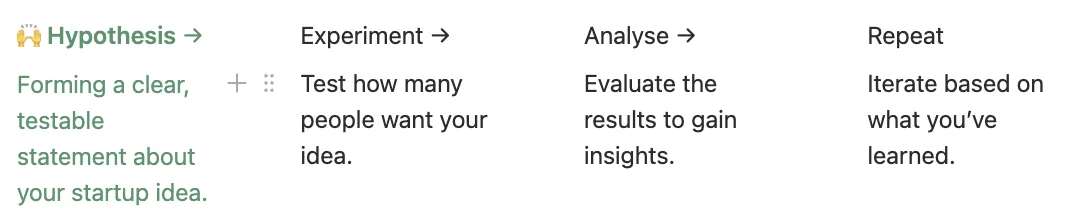
- 082.3 Define Your Startup HypothesisValidation experiments give you real evidence that people want your idea, or don't.
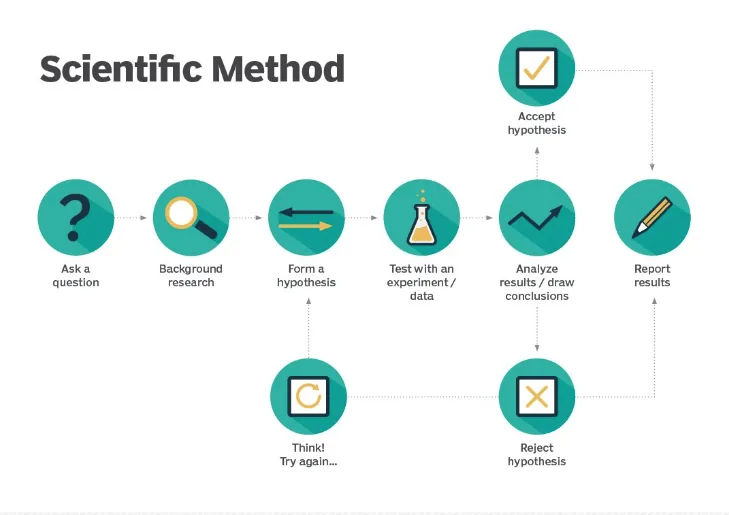
- 092.4 Three Components to Run ExperimentsThe scientific method works for scientists, and turns out, it actually works for startups too.
- 102.5 Introduction to ConfigurationsConfigurations are a "choose your own adventure" approach to validation experiments.
- 112.6 How to Run a Validation ExperimentThe scientific method is a standard way to run experiments and reduce our own bias.
- 122.7 B2B and B2C Configuration ExamplesTo help you better understand configurations, Hsu Ken shares examples of what validation configurations might look like…
- 132.8 Module SummaryThe last video of Module 2!





Module 3: Generate Traffic For Your Idea
- 143.1 Module IntroHsu Ken introduces the first of 3 Components needed to run a validation experiment: Generating Traffic.
- 153.2 4 Channels to Generate TrafficHsu Ken introduces 4 main channels commonly used to generate traffic: 1) Paid Marketing, 2) Outreach, 3) Community, and 4) Hustle.
- 163.3 Paid MarketingDeep dive into one of the most familiar channel used to generate traffic: paid marketing.
- 173.4 OutreachHsu Ken expands on how people use outreach as a channel to generate users.
- 183.5 CommunityLearn about different types of online and offline communities, and how to generate users with each.
- 193.6 HustleHsu Ken introduces the concept of "hustle" as a channel for generating traffic for validation experiments.
- 203.7 How to Choose a ChannelHsu Ken presents 5 different startup ideas.


Module 4: Communicate Your Idea
- 214.1 Module IntroHsu Ken introduces the second of 3 Components needed to run a validation experiment: Communicate Your Idea.
- 224.2 Build a WebsiteLearn why building a website is the most versatile way to communicate your startup idea and why anyone validating a…
- 234.3 Create Sales MaterialHsu Ken discusses why B2B startups should create sales materials to communicate their idea to potential customers, and…
- 244.4 Send Emails and MessagesHsu Ken explains how sending emails and messages is a helpful exercise to explain your startup idea and shares what…
- 254.5 Talk to PeopleHsu Ken one of the most simple, foundational and effective ways of communicating your startup idea: talking to people.
- 264.6 Communicating Your Startup IdeaOften, we think we have a clear idea in our heads, but when we try to explain it to people, it comes out less clear and…
- 274.7 How to Choose a ChannelHsu Ken discusses the different factors to consider when choosing options for how to communicate your startup idea.
- 284.8 Module SummaryWatch to get a condense summary of everything you learned in module 4.


Module 5: Measuring User Interest
- 295.1 How to Measure User InterestHsu Ken shares common ways you can measure interest in your startup idea as you test different hypotheses.
- 305.2 Ranking Measures of InterestLearn which methods of measuring interest will indicate weak or stronger interest in your idea.
- 315.3 Create Interest FunnelsHsu Ken explains how you can create interest funnels to encourage people to become progressively interested in your idea.


Module 6: Real-World Examples
- 32Hsu Ken's Real-World Validation ExampleSee how Hsu Ken tested his idea with social ads, emails and a landing page, and which results mattered most.
- 33Aaron's Real-World Validation ExampleViva Translate got little traction selling to businesses. Then Aaron Yip talked to hundreds of people, found a new audience, and grew a waitlist to 100,000 sign-ups in one month and raised $4.5M.
- 34Sherry's Real-World Validation ExampleIterative rejected Peek at first. Sherry Jiang dug into what users wanted and improved the idea.



Module 7: How to Create a Validation Experiment
- 35B2B and B2C Validation ExperimentsHsu Ken shares 2 tried-and-tested baseline configurations, one for B2B and one for B2C, that work for most every startup idea.
- 36Design Your Validation ExperimentThis sheet teaches you the core concepts behind designing and running your first validation experiment.
- 37How to Track Weekly ProgressA simple weekly scorecard helps you stay focused and see if what you’re doing is working.
- 38Build Your Validation Experiment | Resource ListThe resources below will help you set up lightweight experiments (ads, landing pages , sales materials, and outreach)…

Module 8: Iterating on Your Idea
- 39Lots of User Interest, or Little User Interest. Now What?You have a startup idea and you've started validation experiments.
- 40How to Debug Your ExperimentHsu Ken shares 5 steps to debug your validation experiment. Find and fix the leaks in your interest funnel.
- 41Iterating on Your ExperimentIt’s important to understand why you’re analysing your experiment and how to think about the results.